
Blogs
|FEBRUARY 13, 2026
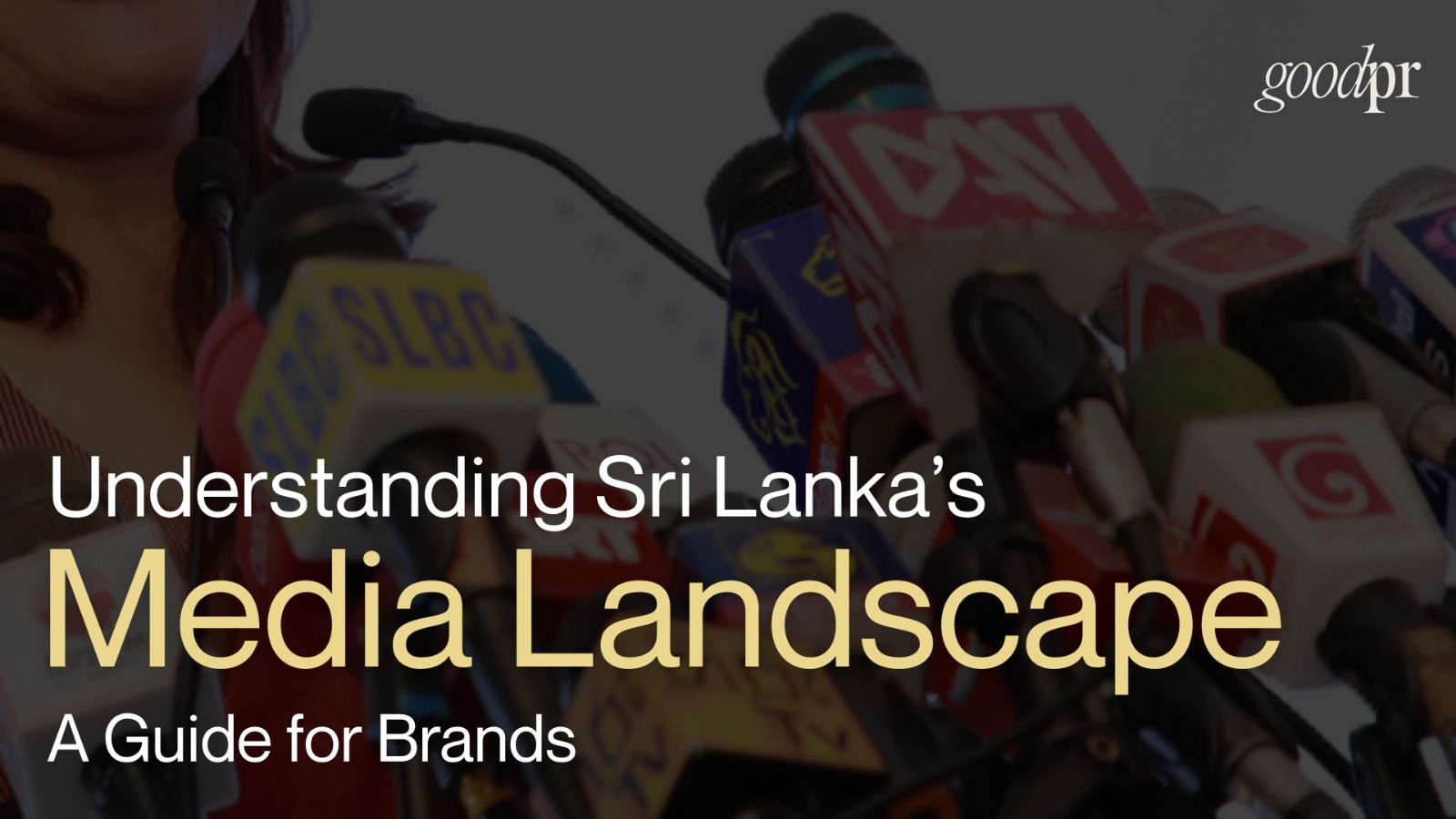
Understanding Sri Lanka’s Media Landscape: A Guide for Brands
Nevindee Amarasinghe
Read Next
Blogs
Why Public Relations Is the Missing Piece in GEO and AEO Strategy
Read Narrative →
Blogs
PR Value and Advertising Value: What They Mean and Why They Matter
Something that most of our clients ask after they receive the PR report is, what are these values highlighted as PR value and Advertising value. If you also thought the same, you’re not alone. PR value and Advertising value are the most commonly cited metrics in any campaign report, but they rarely get a proper […]
Read Narrative →Want the Full Playbook?
Our Crisis Response framework is reserved for partners facing systemic reputation risks.
Enquire Today →Sri Lanka’s media landscape is unlike many others in the region. It is shaped by language, religion, geography, generational behaviour, and deeply rooted trust in traditional media. For brands operating in or entering Sri Lanka, understanding how media actually works on the ground is critical.
While global PR principles may apply in theory, effective communication in Sri Lanka depends on local insight, cultural awareness, and long-term relationship building.
Why Sri Lanka’s Media Landscape Is Unique
Sri Lanka is a multicultural nation with multiple religions, languages, and regional identities. Media consumption varies significantly across Sinhala, Tamil, and English-speaking audiences, and messaging that resonates with one group may not land the same way with another.
Despite a growing digital presence, Sri Lanka has a limited number of influential media outlets, which means credibility is concentrated. At the same time, the country’s audience split is still largely 70% rural and 30% urban, making mass digital-only strategies insufficient for broad reach.
There is also a strong regional and diaspora influence, where stories originating locally can travel quickly through overseas Sri Lankan communities, amplifying both positive and negative narratives. This makes thoughtful media engagement essential, as messaging rarely stays contained within one platform or geography.
The Role of Traditional Media in Sri Lanka
Traditional media continues to play a powerful role in shaping public opinion. A significant portion of the population still engages with newspapers, television and radio, particularly older demographics.
Print Media, especially Sunday newspapers, remains highly influential, with circulation figures consistently strong and credibility levels high. Many readers continue to view newspapers as a trusted source of information, particularly for business, policy, and national issues. Audiences aged 45 and above tend to remain loyal to print, reinforcing its relevance for brands seeking authority rather than quick attention.
Digital Media & Online Publications
Digital media has expanded reach and accessibility across the country, driven largely by convenience. Sri Lanka has approximately 13.9 million internet users and around 9 million social media users, making digital platforms impossible to ignore. We can see media outlets adapting to this new audience, especially with Daily Mirror recently launching Mirror AI, its first artificial intelligence powered article summarisation feature. The feature allows readers to grasp the most important information at a glance while encouraging them to explore the full story for greater detail and context. Features like Mirror AI cater to these audiences that prefer quick and easy access to information.
Digital consumption is not uniform. There is:
- A younger generation drawn to fast, clickable content
- A working and professional segment that prefers e-papers and online news portals
- Audiences who use digital platforms primarily for access rather than entertainment
Digital media offers speed and scale, but credibility still depends on where and how a story appears. Being online does not automatically make content informal, reputable digital publications still follow editorial standards, and journalists expect well-developed, relevant story angles.
Relationships Matter More Than Press Releases
In Sri Lanka, media engagement is deeply relationship-driven. Rapport with journalists, editors, and publications is built over time, not through one-off emails or mass-distributed press releases.
Credibility cannot be bought. It is earned through consistency, relevance, and respect for editorial priorities. This is where PR agencies play a critical role. Agencies invest years building trust with media, understanding what each outlet values, and knowing when and how to pitch stories.
A press release sent by a recognised PR agency is often trusted more than one sent by an individual brand, simply because the agency acts as a filter. These relationships also allow PR agencies to open doors that advertising agencies cannot, reinforcing the idea that relationships are the foundation of effective PR in Sri Lanka.
Common Mistakes Brands Make in Sri Lanka
A common mistake brands make with PR, is over communicating. Publishing too many articles with fewer gaps in between, or trying to say too much in a single piece. This often weakens the message rather than strengthening it.
Other frequent missteps include:
- Treating media coverage as volume-driven rather than relevance-driven
- Packing multiple announcements into one article
- Ignoring the audience’s attention span and context
In a media environment where credibility matters, less is often more. Clear, focused messaging performs far better than information overload.
How Brands Can Work With Media More Effectively
Brands that succeed in Sri Lanka’s media landscape approach engagement as a long-term effort rather than a transactional one. This means actively building and maintaining relationships with media, engaging in ongoing conversations instead of only reaching out when there is news to pitch, and creating opportunities for meaningful interaction through media tours, briefings, and industry conferences. Effective brands also understand the value of supporting media through appropriate advertising partnerships and contributing insights, perspectives, and informed opinions that align with editorial direction.
Conclusion
Sri Lanka’s media landscape rewards brands that understand its nuances. Cultural context, language, trust in traditional media, and relationship-driven journalism all play a role in shaping public perception.
For brands, navigating this environment requires more than generic PR tactics. It requires local insight, strategic thinking, and an appreciation for how credibility is built over time. With the right approach, media engagement in Sri Lanka can become a powerful tool for long-term brand trust and influence.
If you’re looking to engage the media more effectively or better understand how your brand is positioned in the Sri Lankan market, a conversation with our team can help identify the right approach and opportunities that matter most.
By Shevan Gomis
GOOD PR PVT LTD
Want the Full Playbook?
Our Crisis Response framework is reserved for partners facing systemic reputation risks.
Enquire Today →Want the Full Playbook?
Our Crisis Response framework is reserved for partners facing systemic reputation risks.
Enquire Today →