
Food & Nutrition
|JANUARY 21, 2026
Too Ugly to Eat? Why Perfect Food Is Ruining Our Planet
Nevindee Amarasinghe
Read Next
Food & Nutrition
World Food Day 2021 – Strategic thinking on food security for Sri Lankans
The world food day theme 2021 is a good one as all themes go. This year it is “Our actions are our future. Better production, better nutrition, better environment and a better life” So let us see if Sri Lanka is close to being “better”. If we are to really do better, we must step […]
Read Narrative →
Food & Nutrition
WITH A WHISK IN HER HAND AND DANCE SHOES ON HER FEET!
“Life is about taking whisks and chasse towards your dreams!” This is a phrase Annie Ligory, an accomplished Standard and Latin American dancer, and a successful home baker, says when asked about how life is now. Annie is a career woman, who balances between her 9 to 5 job, being a mom, dancing and baking. […]
Read Narrative →Want the Full Playbook?
Our Crisis Response framework is reserved for partners facing systemic reputation risks.
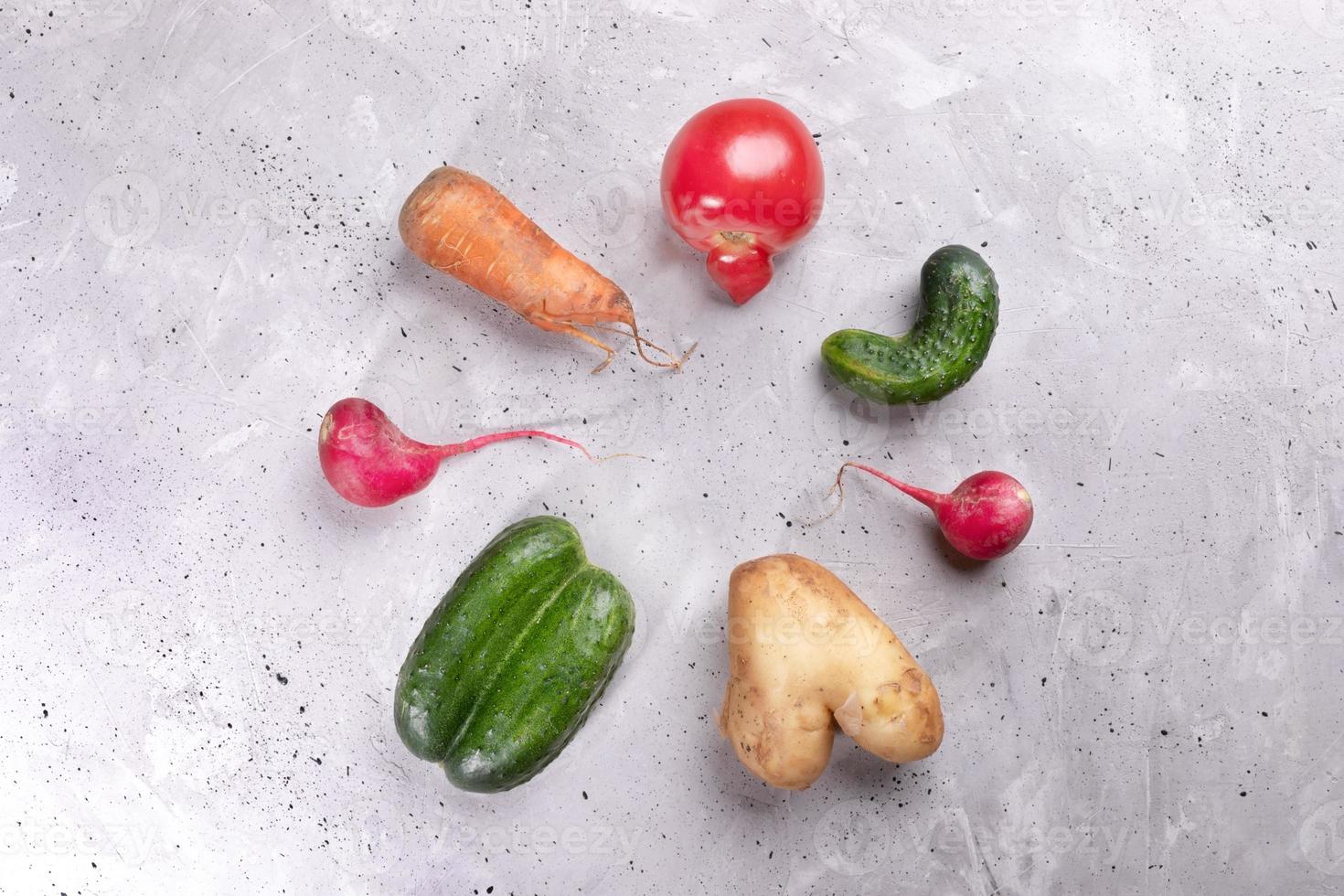
Enquire Today →Walk through any supermarket aisle, and one thing becomes immediately clear, we have learned to expect our food to be flawless. Apples must be shiny and round, carrots straight, tomatoes perfectly red. Anything that looks slightly different is quietly left behind or worse, discarded long before it ever reaches a plate.
This fixation with the visually perfect comes at a heartbreaking price. Every year, massive quantities of perfectly edible produce get discarded simply because it does not look the way it should, without any compromise in terms of either nutrition or safety. This, in turn, translates to wastage of water, soil, and resources in a world where the growing crisis in global food security remains a concern. Why this discomfort, then, with “ugly” foods?
The explanation for this phenomenon has much to do with human psychology, which is strengthened by a lack of understanding about what science has discovered. From a tender age, we begin to grasp the idea of associating beauty with quality and vice versa. This leads to the idea of flaws in produce as less desirable. Flaws or deformation in produce has, in effect, led people to associate them with inferior freshness, taste, and safety. Research, however, has proved this notion to be otherwise.For some consumers, choosing imperfect food even feels like a social risk. Picking up an oddly shaped carrot or a blemished apple can feel like a reflection of personal standards, making people hesitate even when scientific evidence confirms the food is safe, nutritious, and suitable for consumption.
However, consumer attitudes toward imperfect food are not as simple as outright rejection.
The findings have established that consumers’ reactions change according to the presentation and usage of food. When fruits and vegetables are marketed in their whole, raw state as apples, potatoes, or carrots, visible defects decrease preference. The reverse happens when the same produce undergoes processing: applesauce, chips, soups, sauces, and French fries are rated for flavor, texture, and convenience rather than appearance, and therefore suboptimal produce is most suitable as a raw material for processing industries.
Why does this happen?
Uniformity in food products is traditionally connotative of industrial scales of production that are efficient but not personal. Conversely, slight discrepancies in processed meals are often taken as an indicator of minimal processing, craftsmanship, and authenticity. From a food science perspective, processes like peeling, pulping, drying, fermentation, as well as cooking, eliminate any external flaws completely. However, slight flaws are still regarded as indicators of less-than-ideal agricultural practices in raw produce.
Understanding these perceptions has opened the door for smarter, science-backed solutions.
Entrepreneurs and food system stakeholders have begun reimagining how imperfect produce is positioned. One effective approach is emphasizing naturalness. Labels such as “naturally grown,” “grown under environmental stress,” or “produced with minimal chemical inputs” help consumers understand that visual variation is a natural outcome of agricultural production. When imperfections are framed as indicators of natural growth rather than failure, consumer acceptance improves.
The other strategy that works well is by pointing out reasons why food may not be perfect. If it is due to factors that cannot be controlled, such as weather or insects, it is important to point out how it affects the environment, like wasted water, nutrients, and energy, so that sustainable consumption is promoted. If it is due to factors that can be controlled, it is important to point out food use and support for farmers.
However, education remains an important component. Many people are under the impression that quality correlates to looks, despite scientific proof to the contrary, in terms of quality being dependent on ripeness, diversity, and post-harvest treatment. However, educating people about the gap can help minimize rejects at the retail level. At the same time, processing imperfect produce into processed foods, such as juice, pureed fruits, sauces, dried fruits, and
Most fundamentally, wider market availability helps normalize the idea of “imperfection.” As consumers grow accustomed to variation, reject levels decline, and the use of produce increases. Beauty-based waste isn’t an inevitable byproduct of food production and transportation. Science-based education, improved handling practices, creativity in food processing, and optimized food systems can help the world progress from “beauty-based” reject levels to sustainable use, thereby mitigating emissions, increasing resource use efficiency, and contributing to the achievement of Sustainable Development Goal 2: Zero Hunger.
Nature doesn’t grow flawless crops, and this is just fine. Perhaps the time has come to appreciate our food for what it can do to our bodies and the planet, rather than how it looks.
W.N.A Wickramasinghe
UWU/EAG/21/109
+94 75 522 45 61
Want the Full Playbook?
Our Crisis Response framework is reserved for partners facing systemic reputation risks.
Enquire Today →Want the Full Playbook?
Our Crisis Response framework is reserved for partners facing systemic reputation risks.
Enquire Today →