
Blogs
|MARCH 6, 2026
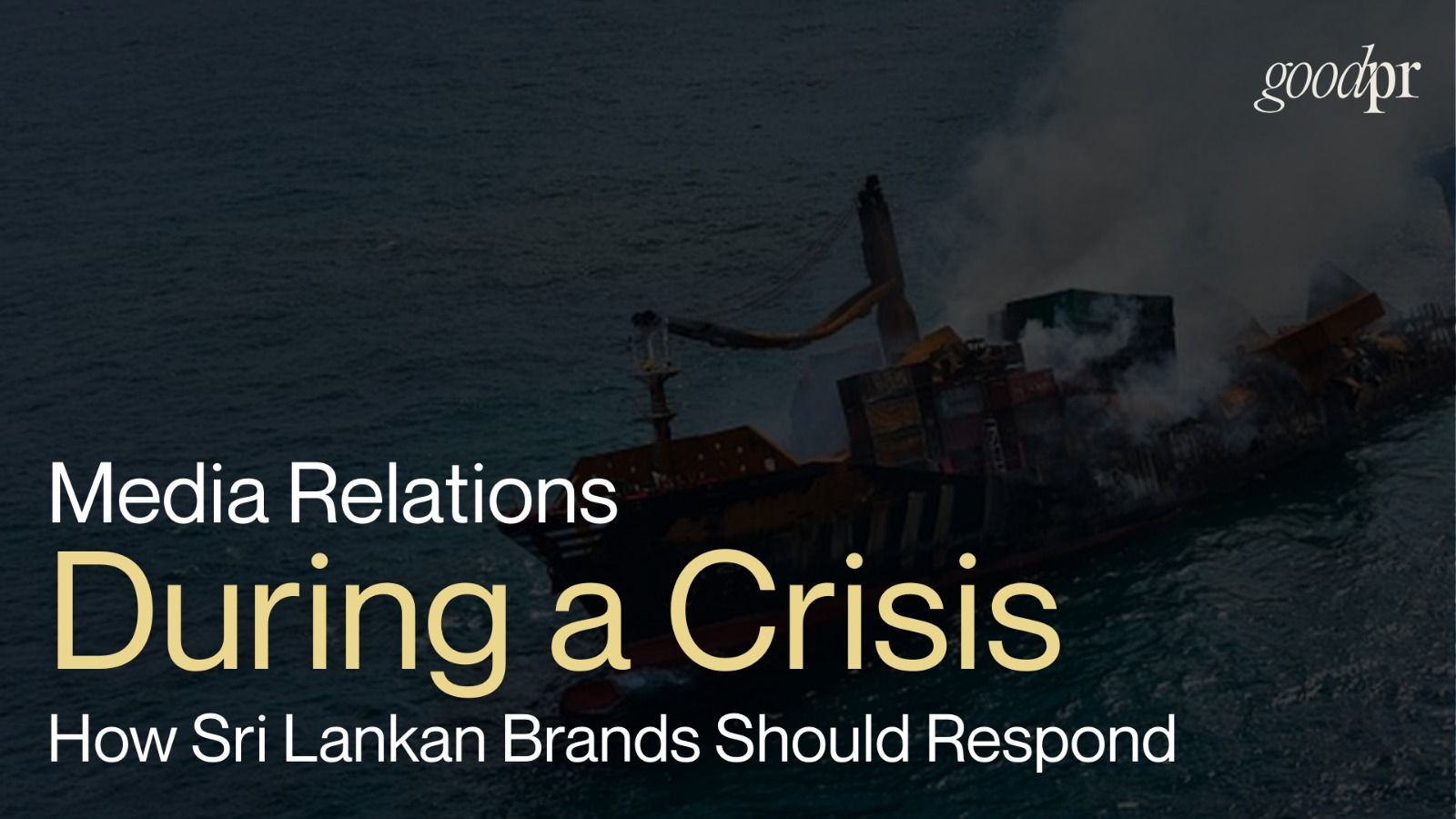
Media Relations During a Crisis: How Sri Lankan Brands Should Respond
Nevindee Amarasinghe
Read Next
Blogs
Why Public Relations Is the Missing Piece in GEO and AEO Strategy
Read Narrative →
Blogs
PR Value and Advertising Value: What They Mean and Why They Matter
Something that most of our clients ask after they receive the PR report is, what are these values highlighted as PR value and Advertising value. If you also thought the same, you’re not alone. PR value and Advertising value are the most commonly cited metrics in any campaign report, but they rarely get a proper […]
Read Narrative →Want the Full Playbook?
Our Crisis Response framework is reserved for partners facing systemic reputation risks.
Enquire Today →Sri Lanka’s media ecosystem is unique, and so is its audience. Traditional media outlets such as newspapers and television, maintain high public trust, while social media amplifies news rapidly across communities and the diaspora.
How a brand responds during these critical moments can make the difference between maintaining trust and enduring long-term reputational damage. While some companies believe they can handle crises by contacting media directly or issuing one-off statements, effective crisis management requires strategic media relations, careful planning, and consistent messaging. This guide explores how Sri Lankan brands can navigate media relations during a crisis to protect credibility and maintain control.
Why Crisis Communication Matters in Sri Lanka
Sri Lanka’s media ecosystem is unique, and so is its audience. Traditional outlets, such as newspapers and television, maintain high public trust, while social media amplifies news rapidly across communities and the diaspora.
Crises here are influenced not just by facts, but by cultural context and public behaviour. Religious and ethnic sensitivities, family-oriented values, and strong community networks shape how news is received and interpreted. A statement that seems neutral in one context may unintentionally offend or alarm another.
Adding to this complexity, the public often distrusts government publications, viewing them as potentially biased or influenced by corruption. Many also perceive that some media coverage can be “bought” or swayed by commercial interests. This makes credible, independent media engagement critical — people respond to trusted sources, not just the loudest or most frequent voices.
Sri Lankans are also prone to following the crowd without independent verification, especially during uncertain times. A recent example is the massive fuel queues that formed after the US-Israel attacks on Iran. Despite assurances from the Ceylon Petroleum Corporation that the country had sufficient fuel stocks for a month, and that oil is imported from Russia and other Asian countries — not Iran — the public still rushed to panic-buy fuel. This behaviour highlights how misinformation, rumours, and herd mentality can amplify crises, making proactive, credible communication essential.
With roughly 70% of the population living in rural areas and 30% in urban centres, messaging must be carefully tailored for diverse audiences, balancing sensitivity, cultural nuances, credibility, and public perception. In Sri Lanka, a poorly managed crisis can escalate quickly if these factors are ignored, making culturally aware, strategic communication essential.
The Role of Media Relations in a Crisis
Media relationships are the cornerstone of effective crisis communication. Brands that have invested in long-term, professional relationships with journalists and editors find that coverage is more balanced and fairer, even during negative events.
Direct outreach without an existing relationship often backfires. Brands sending multiple, poorly framed press releases risk being ignored or perceived as opportunistic. In contrast, PR agencies act as intermediaries, ensuring messaging is relevant, credible, and aligned with both media standards and audience expectations.
Why Journalists Respond Differently to PR Agencies
Journalists and editors often treat agency pitches differently from direct brand outreach. Agencies are accountable for the quality and relevance of their stories; they filter weak angles before reaching the newsroom, respect editorial boundaries, and understand what genuinely constitutes news. Over time, agencies build a track record of delivering credible, well-structured narratives.
A press release agency doesn’t simply forward content, it vouches for its legitimacy and value. In contrast, direct submissions from brands can be overly promotional, poorly positioned, or increasingly, AI-generated without refinement or strategic framing. Generic, machine-written articles lacking human insight or contextual understanding are quickly identified and rarely taken seriously. Credibility in media relations cannot be automated, rushed, or improvised.
Key Steps Brands Should Take During a Crisis
Effective crisis response in Sri Lanka requires a proactive and culturally aware approach. Brands should:
- Acknowledge the situation quickly – Transparency builds trust. Avoid delays, which can be interpreted as concealment.
- Prepare a clear, consistent message – Align spokespeople to prevent conflicting statements.
- Leverage trusted media contacts – PR agencies can help identify journalists and outlets that will convey your message accurately and responsibly.
- Avoid reactive social media posts – Unverified or emotional statements can escalate crises.
- Monitor public sentiment and herd behaviour – Misinformation can spread rapidly, as seen in the recent fuel panic. Proactively counter rumours with credible messaging.
- Provide updates as the situation evolves – Timely, factual communication maintains credibility.
- Respect cultural sensitivities – Messaging must account for religion, ethnicity, family, and community values to avoid unintended backlash.
Common Mistakes Sri Lankan Brands Make in Crises
Many Sri Lankan brands make critical missteps when managing crises. Some rely on generic or AI-generated press releases, which lack context, insight, and human judgment, making them easy for journalists to dismiss. Others over-communicate or flood media outlets with conflicting statements, creating confusion rather than clarity. Many treat coverage as a “win” instead of a responsibility, overlooking the fact that tone, accuracy, and credibility matter far more than mere publication. Smaller or niche publications, which influence specific communities and audiences, are often ignored, leaving gaps in the brand narrative that can quickly be filled by rumours or misinformation.
How a PR Agency can Add Value during Crises
PR agencies play a crucial role in helping brands navigate crises effectively. Beyond drafting press releases, they act as a buffer between the brand and media, protecting credibility while ensuring messages are strategically timed and clearly communicated. Agencies maintain long-term relationships with journalists, which is critical during sensitive situations, and guide brands on cultural and contextual nuances, including religion, ethnicity, community values, and public sentiment. They monitor reputation, proactively mitigate misinformation, and ensure messaging resonates with audiences while maintaining trust. In short, PR agencies bring strategic oversight, credibility, and experience that brands attempting direct outreach rarely achieve on their own.
Conclusion
In Sri Lanka’s media landscape, credibility, trust, and cultural awareness matter more than sheer visibility. Strategic media relations allow brands to respond to crises with clarity, authority, and cultural sensitivity, protecting long-term reputation. Attempting to manage crises through direct media outreach or generic content is risky and often counterproductive. Professional PR guidance ensures that your brand’s message is accurate, credible, and well-received, even under pressure.
At Good PR, we help Sri Lankan brands navigate crises with strategic media engagement, clear messaging, and reputation management. If your brand wants to respond to challenges with authority, credibility, and control, get in touch with our team today.
Want the Full Playbook?
Our Crisis Response framework is reserved for partners facing systemic reputation risks.
Enquire Today →Want the Full Playbook?
Our Crisis Response framework is reserved for partners facing systemic reputation risks.
Enquire Today →